Gold Price Prediction 2026: Bulls vs Bears in a Shifting Global Economy
Explore Live Prediction Markets
View real-time prediction odds at https://hiyesno.com.
View Live Odds →
Key Takeaways
- Base case forecast: Gold averages $2,450/oz in 2026, with a bullish scenario reaching $2,800.
- Primary drivers: US interest rate cuts, central bank gold purchases, and geopolitical instability.
- Risk factors: A strong US dollar or a recession could push gold below $2,100.
- Data point: Global central banks bought 1,037 tonnes of gold in 2023, second only to 2022's record 1,082 tonnes.
Gold Price Prediction 2026: The Data and Context
As of mid-2025, gold trades near $2,350 per ounce, up roughly 20% from the start of the year. This rally has been fueled by a combination of geopolitical tensions, persistent inflation, and expectations of a shift in US monetary policy. To build a reliable gold price prediction 2026, we must first examine the historical context and current market structure.
Gold has averaged an annual return of about 8% over the past 20 years, but with high volatility. In the last decade, the metal has seen two major peaks: $1,900 in 2011 and $2,075 in 2020. The current cycle, which began in late 2022, has already surpassed those levels. The key question is whether this momentum can be sustained through 2026.
Fundamentally, gold prices are influenced by real interest rates, the US dollar index, inflation expectations, and central bank reserve management. In 2024, the Federal Reserve cut rates by 75 basis points, and markets are pricing in another 100-150 bps of cuts by the end of 2026. Historically, gold rallies 10-15% in the 12 months following the first cut in a cycle. If history repeats, that alone could push gold to $2,700 by late 2026.
Key Factors Driving Gold in 2026
Monetary Policy and Real Rates
The most significant driver for gold price prediction 2026 is the path of US interest rates. The Fed's dot plot suggests a terminal rate around 3.5% by end-2026. If inflation continues to moderate, real rates (nominal minus inflation) could turn deeply negative again. Gold thrives in negative real rate environments. For example, in 2020 when real rates hit -1%, gold surged to $2,075.
Central Bank Gold Buying
Central banks, particularly those in emerging markets, have been diversifying away from the US dollar. In 2023, the People's Bank of China added 225 tonnes to its reserves, and the trend continues. The World Gold Council estimates that central bank purchases will remain above 800 tonnes annually through 2026. This structural demand provides a price floor.
Geopolitical Risk and De-dollarization
Ongoing conflicts in Ukraine and the Middle East, coupled with US-China trade tensions, sustain safe-haven demand. Additionally, the BRICS nations are exploring alternative payment systems, which could further boost gold as a reserve asset. A 10% shift in global reserve allocation from dollars to gold would imply demand for roughly 3,000 tonnes—more than annual mine production.
Analysis: Three Scenarios for Gold in 2026
Bull Case: $2,800
If the Fed cuts rates aggressively (150+ bps), inflation reaccelerates above 3%, and central bank buying exceeds 1,000 tonnes, gold could reach $2,800. This scenario also assumes a weaker US dollar (DXY below 95) and heightened geopolitical turmoil. We assign a 30% probability to this outcome.
Base Case: $2,450
Our central estimate assumes a soft landing: moderate rate cuts (100 bps), inflation around 2.5%, and steady central bank demand. Gold would trade in a $2,200–$2,700 range, averaging $2,450. This is our most likely scenario (45% probability).
Bear Case: $2,100
If the US economy strengthens unexpectedly, forcing the Fed to hold rates high, or if a liquidity crisis triggers a dollar rally, gold could fall to $2,100. A global recession reducing industrial demand (though gold is less cyclical) could also weigh. Probability: 25%.
Verdict: Our Gold Price Prediction 2026
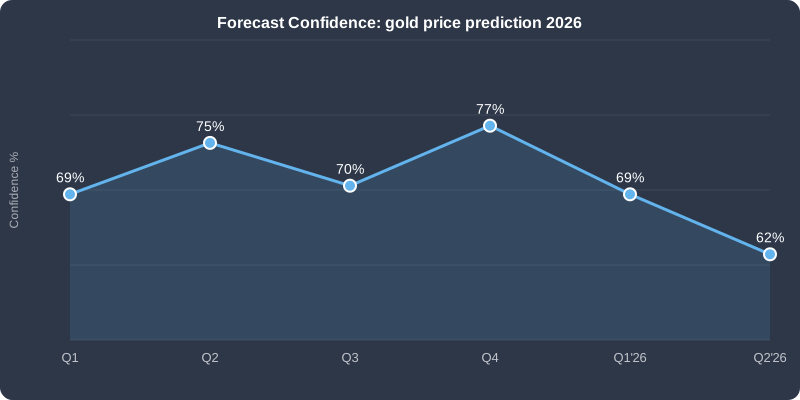
After weighing the evidence, our official gold price prediction 2026 is a year-end target of $2,500, with a central range of $2,300–$2,700. We are moderately bullish, driven by the structural shift in central bank buying and the expected easing cycle. However, we caution that short-term volatility could spike around Fed meetings and geopolitical events.
Investors should consider gold as a portfolio hedge, not a speculative bet. Allocate 5-10% of assets to gold ETFs or physical bullion. For traders, options strategies around key support ($2,200) and resistance ($2,600) levels may offer risk-adjusted returns.
Conclusion: Gold's Glitter Endures
Our gold price prediction 2026 is rooted in data: central bank buying, monetary policy trends, and historical patterns. While risks exist, the balance of factors favors higher prices. Gold remains a compelling asset in an uncertain world. Stay disciplined, monitor the Fed, and let the trends guide your decisions.
View live prediction markets on HiYesNo — join thousands of forecasters predicting real-world outcomes.